Somewhere Between Work and Home, You Lost a Place to Land
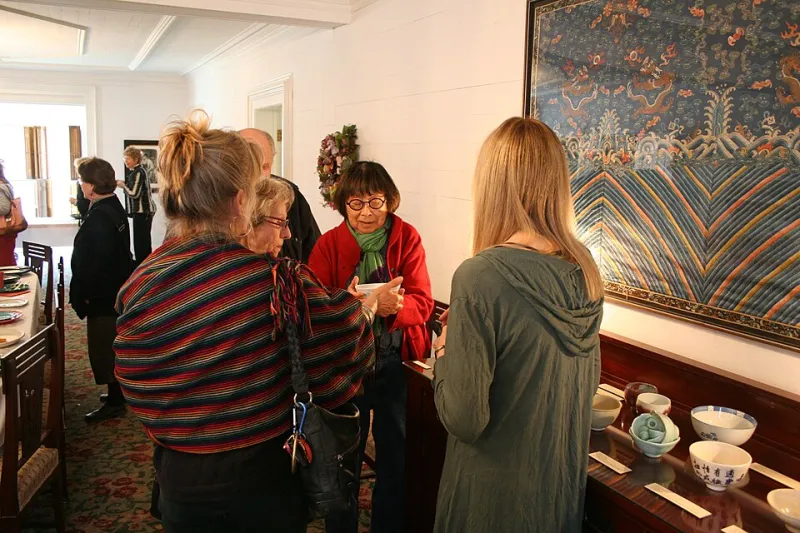
Photo: Museumlovers, CC BY-SA 4.0, via Wikimedia Commons
It's 6:40 on a Tuesday and you're taking the long way home. Not because of traffic. Because there's nowhere you're expected to be, and that stretch between the last meeting and the front door has quietly become the emptiest two miles of your day.
Home is a couch and a to-do list. Work is a calendar and a group chat. Somewhere in the middle, a lot of us misplaced the third thing — the bar stool, the rec-league gym, the library table, the Saturday run crew that goes out rain or shine. The place where nobody needs anything from you, nobody is scoring you, and yet somebody notices when you don't show up.
There's a term for the hole in your week
In 1989, sociologist Ray Oldenburg gave this a name: the third place. Not home (first), not work (second) — the informal, in-between spots that hold a neighborhood together. Coffee shops, taverns, parks, barbershops, church basements, bowling alleys, chess tables, barrio plazas. He argued a functioning public life needs them the way a stool needs three legs.
Decades of research since then have largely confirmed the hunch. Robert Putnam's Bowling Alone traced the long unraveling of clubs, leagues, and lodge halls across the back half of the twentieth century. More recent work on loneliness keeps landing on the same observation: it isn't just that we have fewer people to talk to. It's that we have fewer places to run into them by accident.
That distinction matters, because it points at a fix that doesn't require a personality transplant.
The group chat is not a room
Digital connection is real connection — nobody's arguing otherwise. But a text thread has a hidden cost: it only exists when someone initiates it. Every interaction has to be scheduled, prompted, kept alive. There's no ambient version of it. You never just... turn up.
A physical third place runs on the opposite logic. You walk in. Someone nods. The barista knows your order. The guy at the Tuesday pickup game asks where you were last week. These are what sociologists call weak ties — low-stakes, low-drama relationships that turn out to be some of the strongest predictors of feeling rooted where you live. They don't demand much. They just require repetition.
The strange part is that this was never a personality trait. It was architecture. Most of us didn't become less social; we became less located.
What it actually costs (and it's less than you think)
A third place doesn't have to be a third bill. The US is unusually well stocked with cheap ones if you know where to look:
- Public libraries. Free, climate-controlled, and increasingly full of programming for adults — book clubs, maker labs, genealogy nights.
- Parks and rec departments. Every city has one. Most run leagues, classes, and drop-in hours that cost less than a dinner out.
- Run clubs and walking groups. Free by design. The only entry fee is showing up slower than everyone else for a month.
- Community gardens. Plot fees are often modest, and the people are usually eager for help.
- Cafes and diners. A $4 drip coffee and two hours of loitering is a bargain that would have been unremarkable in 1975.
- Faith spaces, Elks lodges, VFWs, and civic clubs. Underrated and quietly desperate for new members.
- Classes where the point isn't the skill. Pottery, salsa, adult swim, pickleball. You're not there for the craft. You're there for the same fifteen people every week.
A realistic month-long plan
You don't need a strategy session. You need a radius and a little stubbornness.
Week one: draw a map. Circle fifteen minutes in any direction from home. Everything interesting happens within that circle or it doesn't happen. List five spots inside it you've never been inside.
Week two: pick the lowest-commitment option. Not the one that sounds most impressive. The one with the fewest barriers — free, walkable, no application form.
Week three: go three times at the same time. This is the whole trick. Belonging is a lagging indicator. The first visit is awkward, the second is neutral, and by the third someone recognizes you. Same day, same hour, every time.
Week four: be a regular, not a customer. Regulars have rituals; customers have transactions. Learn one name. Ask one question. Sit in the same seat. Leave when you feel like it.
The part nobody warns you about
It will feel weird at first, and it will feel weird specifically because it's not productive. There's no output. No badge. You are literally just being somewhere.
That's the point. Sitting in a room with strangers you'll see again is one of the last genuinely unoptimized things left. It won't show up on a résumé. It might show up in your blood pressure.
So take the long way home on purpose this week. Then stop, park, and go inside.