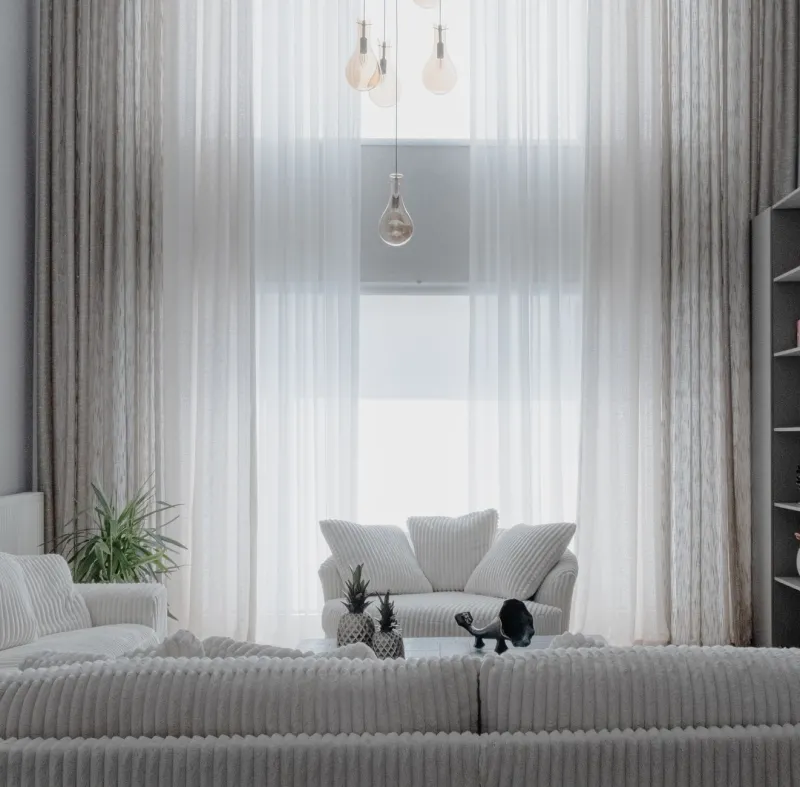
Your Living Room Might Be the Reason You Can't Calm Down
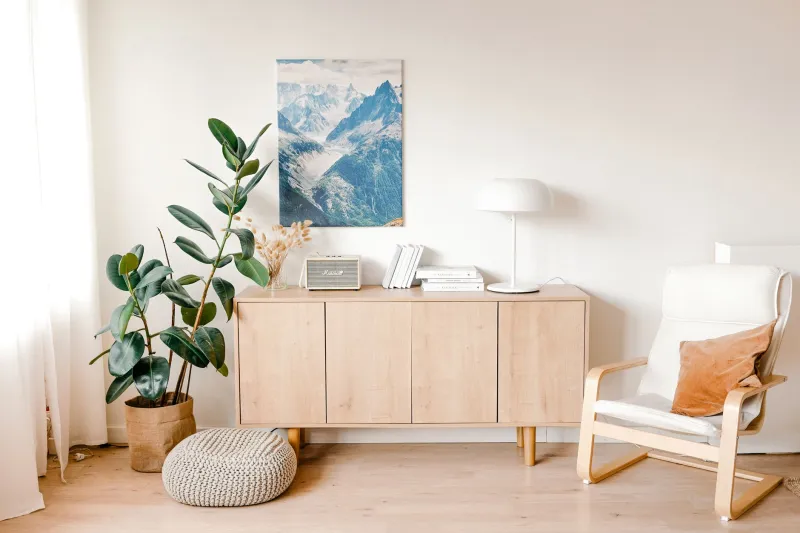
You walk through the door after a long day, drop your keys, and immediately feel... tense. Not dramatically stressed — just that low-level, ambient hum of unease that's become so familiar you've stopped questioning it. You figured it was the job. The news cycle. Life.
But what if it's your living room?
Environmental psychology has been quietly building a compelling case that the spaces we inhabit don't just reflect our mental state — they actively create it. The colors on your walls, the way furniture is arranged, the quality of your lighting, the amount of visual clutter in your peripheral vision — all of it is sending signals to your nervous system, all day long. And most of us have never stopped to audit what those signals are actually saying.
Let's change that.
The Color Problem You Probably Don't Know You Have
Color psychology isn't new, but its practical application in everyday American homes is wildly underutilized. Most of us choose paint colors based on what looks good on a swatch or what matches our couch. We rarely stop to ask: what is this color doing to me emotionally?
Here's a quick orientation:
Red is stimulating — great for energy and appetite (hence every fast food logo ever), but actively counterproductive in spaces where you're trying to decompress. A bold red accent wall in your bedroom might be costing you more sleep than you realize.
Yellow triggers alertness and can lift mood in small doses, but in large amounts or high saturation, it's associated with increased anxiety. There's a reason some studies have found people argue more in yellow kitchens.
Blue consistently ranks as calming and focus-enhancing — particularly softer, muted blues. Navy, however, can read as heavy and oppressive in rooms with limited natural light.
Green is the sleeper hit of calming colors. Associated with nature and restoration, it's one of the most psychologically neutral and soothing options for living spaces — particularly sage and olive tones that are having a very justified moment in interior design right now.
Gray — the dominant neutral of the last decade — is trickier than it looks. Cool grays can feel clinical and emotionally flat over time, contributing to a vague sense of emptiness some people attribute to other causes.
What to do: You don't need to repaint everything tomorrow. Start by noticing which rooms you avoid or feel most uncomfortable in, and consider whether the color might be a contributing factor. Even swapping throw pillows, rugs, or artwork toward a more intentional palette can shift the emotional register of a space.
The Clutter-Cortisol Connection
This one's backed by some pretty striking research. A study published in the Personality and Social Psychology Bulletin found that women who described their homes as cluttered or full of unfinished projects had significantly higher levels of cortisol — the primary stress hormone — throughout the day compared to those who described their homes as restful and restorative.
Clutter isn't just aesthetically displeasing. It's cognitively demanding. Every pile of mail, every item out of place, every surface with too much on it is a micro-demand on your attention — a tiny, unresolved task that your brain registers and logs. Multiply that by every room in your home and you have a constant, low-grade drain on your mental bandwidth before you've done a single thing.
The American tendency toward accumulation — bigger homes, more storage, more stuff — has made this worse, not better. We have more square footage than any previous generation and somehow feel like we have less room to breathe.
What to do: You don't need to go full minimalist. But pick one surface in your home — a kitchen counter, the entryway table, your nightstand — and commit to keeping it completely clear for two weeks. Just one surface. Notice whether it changes how you feel when you walk into that space.
Lighting: The Design Element That's Running Your Mood
If color is the personality of a room, lighting is the nervous system. And most American homes are lit in ways that actively work against the emotional experience people are hoping to have.
Overhead lighting — especially the flat, bright kind common in apartments and builder-grade homes — is efficient and cheap, but it's also harsh and clinical. It doesn't differentiate between 7 AM and 10 PM, between a work-from-home Tuesday and a relaxed Sunday morning. Your nervous system, however, is deeply aware of those differences.
Humans evolved under the gradual shift of natural light — warm and directional in the morning, bright at midday, golden and low in the evening. When we blast the same overhead fluorescent light at 9 PM that we used at 9 AM, we're confusing our circadian rhythm, suppressing melatonin production, and signaling to our brain that it should still be alert and ready.
What to do: Invest in a few floor or table lamps and use them in the evenings instead of overhead lights. Look for bulbs in the 2700K–3000K range (labeled 'warm white' or 'soft white') for living spaces and bedrooms. If you can add a dimmer switch to even one room, do it — the ability to lower light levels in the evening is one of the highest-ROI wellness upgrades you can make to a home.
Spatial Flow and the Invisible Architecture of Anxiety
This one is subtler but genuinely powerful. The way furniture is arranged — the pathways it creates or blocks, the visual weight it places in different areas of a room — affects how your body moves through space and, consequently, how safe and at ease you feel in it.
Research in environmental psychology suggests that humans feel most comfortable in spaces where they can see the entrance (a concept called 'prospect and refuge' — the evolutionary preference for being able to see threats while remaining protected). Furniture arrangements that place your back to the door, or that create cramped, obstacle-filled pathways, can trigger a subtle but real sense of unease.
Similarly, rooms that feel visually 'heavy' on one side — too much furniture clustered in one area, one wall crowded with artwork while others are bare — can create a sense of imbalance that registers as low-level discomfort without any obvious cause.
What to do: Sit in your most-used chair or spot on the couch and look around. Can you see the main entrance to the room? Is the visual weight roughly balanced? Are there clear, easy pathways through the space? Small furniture rearrangements — moving a chair, floating a sofa away from the wall — can dramatically change how a room feels without spending a dollar.
The Element You Can Add Today
If all of this feels overwhelming, here's the one thing that environmental psychology research consistently supports as a fast, accessible mood-improver: bring something living into your space.
Plants. Natural materials. A bowl of fruit. A vase of flowers from the grocery store checkout line.
Studies from NASA, the University of Exeter, and multiple horticultural therapy programs have found that the presence of plants and natural elements in indoor environments reduces stress, improves focus, and increases feelings of wellbeing — even when the plants are small and the exposure is brief.
Your home is one of the seven dimensions of a well-lived life, and it deserves the same intentional attention you'd give to your fitness routine or your finances. The space around you isn't neutral. It's either working for you or against you.
The good news is, it doesn't take a renovation to start shifting the balance.