Where Do You Go When You Have Nowhere to Be?
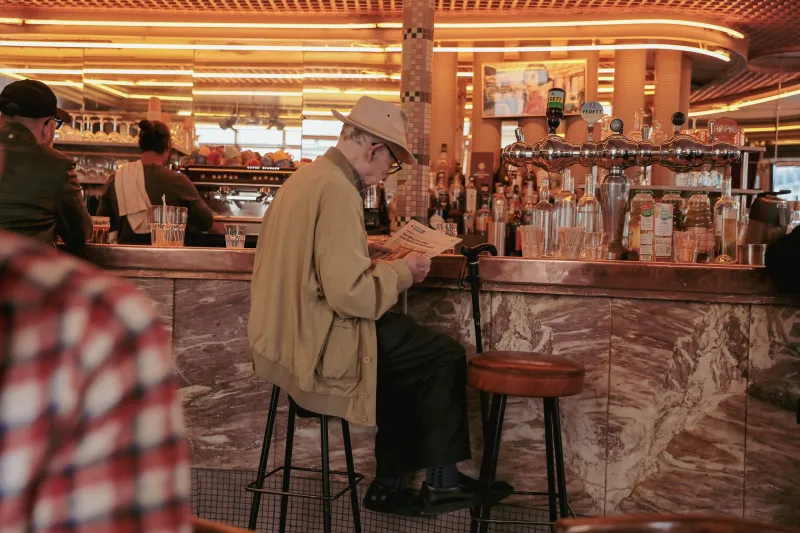
There was a diner near my last apartment where the waitress knew my order and absolutely nothing about my life. I went twice a week for the better part of two years. I could not have told you her name. It was, without question, one of the most important relationships of that period.
That's a third place. And there's a decent chance you don't have one.
The Definition Is Looser Than You'd Expect
Sociologist Ray Oldenburg coined the term in his 1989 book The Great Good Place, describing the spots that are neither home (first place) nor work (second place). His checklist is worth reading in full, because it explains almost everything about why these places are so hard to replace: it has to be neutral ground, where nobody is obligated to host. Conversation is the main activity, not a side effect. Access is easy. Regulars set the tone. The mood is playful. And crucially — it's a little plain. A home away from home, not a destination.
That last part is the one we keep getting wrong. Third places aren't special. They're default.
Why They Disappeared
This isn't a story about phones, at least not entirely. The groundwork was laid decades ago.
Postwar suburban design physically separated the places people live from the places people gather. Zoning did the rest, pushing commerce and community out of residential blocks and making a car the price of admission. The front porch stopped being a place to sit. Commercial rents climbed until low-margin coffee counters and corner bars became hard to keep alive. Robert Putnam's Bowling Alone tracked the decades-long collapse of leagues, clubs, and lodge halls long before anyone was doomscrolling.
Then the pandemic compressed ten years of decline into two: remote work removed the office as an incidental social space, delivery replaced the errand, and a lot of the small places — the ones with thin margins and loyal regulars — never reopened. We didn't just lose places. We lost the habit of going to them.
The Cost Isn't Just Emotional
In 2023, the U.S. Surgeon General issued an advisory calling loneliness and isolation an epidemic, tying social disconnection to elevated risk of heart disease, dementia, and stroke, with mortality effects compared to smoking regularly. That's the headline version. The subtler damage is what a lack of third places does to the middle layer of your social world.
Your close friends know the same job openings, the same neighborhoods, the same handful of people. Sociologist Mark Granovetter's classic research on weak ties found that new information and opportunity flow mostly through acquaintances, not intimates. The person at the climbing gym who nods at you doesn't owe you anything, and that's precisely what makes them useful, and interesting, and alive.
Third places also teach a skill that's quietly disappearing: being a person in public. How to make small talk that goes nowhere. How to sit near strangers without needing anything from them. That muscle atrophies fast.
The Part Nobody Wants to Hear
Belonging in a third place cannot be optimized. It's manufactured by repetition, low stakes, and unremarkable Tuesday evenings.
You go. Then you go again. Nobody hands you a membership card. There's no onboarding, no group chat, no name tag. This is exactly the mechanism that makes it work, and exactly why so many of us bail after two visits because it didn't feel like anything yet.
How to Find Yours
Start within ten minutes. Proximity beats perfection, every time. A place you'll actually return to on a random Wednesday is worth more than a beautiful spot a twenty-five-minute drive away.
Ignore the aesthetic. A strip-mall taqueria with plastic chairs and the same six regulars beats a stunning café you visit twice.
Match the hours to your actual life. Not your aspirational life. The one with the 6:15 p.m. commute.
Show up at the same time. Rhythm makes regulars. Enthusiasm doesn't.
Talk, but don't force it. Comment on the game on the TV, the dog, the weather. That's the whole bar.
Good candidates people overlook: the public library, the YMCA, rec-center leagues, the dog park, the laundromat, diners, hobby shops, climbing gyms, barbershops, church basements, and community-center classes that require zero talent.
If There's Nothing to Find, Make a Small One
The most reliable third place is the one you host. It doesn't need a name or a group chat or a logo. It needs a time, a place, and an open invitation. Tuesday night dinner. Saturday morning walk. A monthly board game night where the snacks are bad and nobody minds.
Repetition is the ingredient. Everything else is decoration.
Oldenburg called a good third place a home away from home. Home took work too — and a lot of it happened on the porch.